
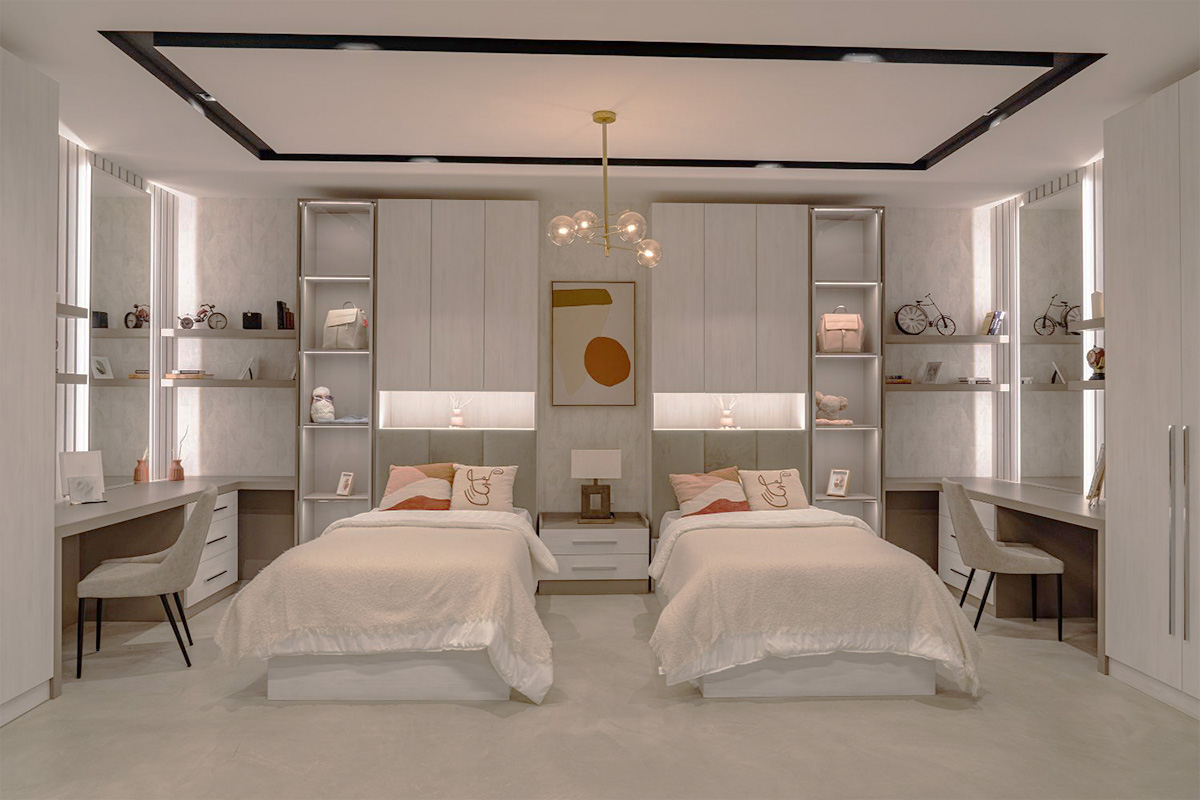
A child’s bedroom is not a fixed space. It changes as its owner changes from the first protective crib to the study desk to the privacy a teenager demands. The problem is that many parents design a child’s room once and then find themselves facing a complete redesign at every stage. The smarter solution is flexible design from the beginning.
At Creative Closets, we design children’s room solutions that grow with the child. The wardrobe does not change, but its interior does. The materials stay, but the divisions adjust. This is what intelligent design means in a child’s bedroom.
Stage One: Early Childhood.. Safety Above Everything
At this stage the room serves both the child and the parents. A children’s Closet here needs low drawers the child can reach independently, short hanging sections for small clothes, and smooth surfaces without sharp edges. Colors at this stage are part of the design, not just decoration, children learn and interact with their environment visually before they can speak.
Closet design at this stage also considers the mother’s storage needs, towels, spare clothing. Everything within reach and in a clear order.
Creative Closets always use world-class European materials for wood, accessories and hinges in all its products with a 25-year guarantee.
Stage Two: Pre-School.. Making Order a Habit
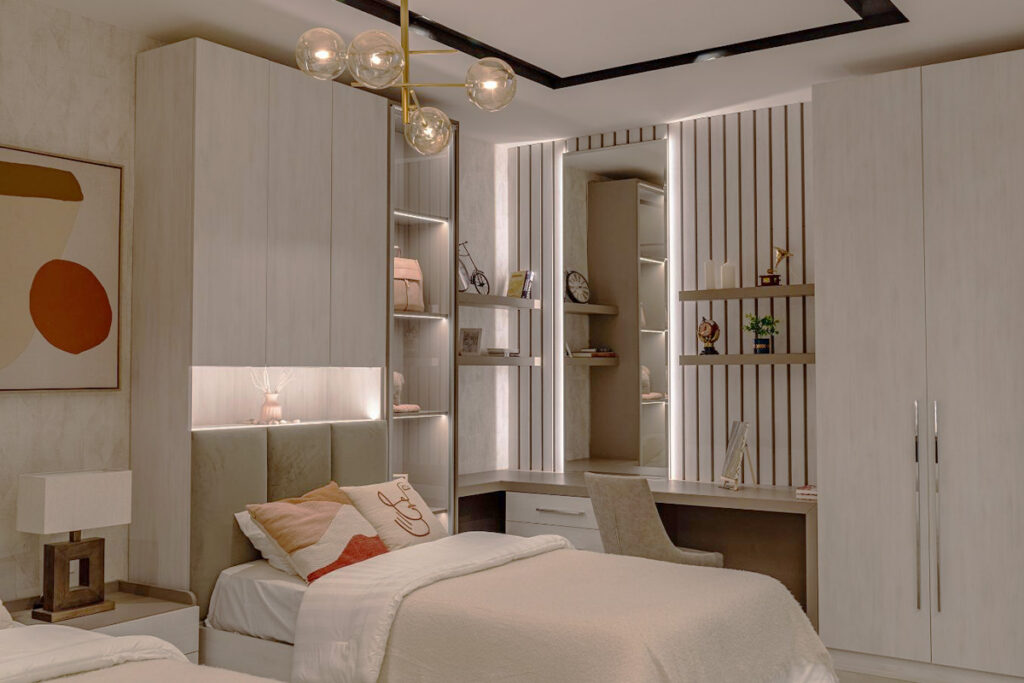
As the child begins developing independence, the bedroom becomes a learning environment. A wardrobe at this stage needs clear divisions the child understands on their own, a place for school clothes, a place for home clothes, a place for shoes. When the divisions are logical and visible, the child learns organization as a daily habit rather than a parental instruction.
Wardrobe shelves at this stage also include space for books and educational toys. The child’s bedroom here is a complete environment, not just a place to sleep.
Stage Three: School Age.. Focus and Organization
This stage changes the priorities of the entire room. Studying requires a quiet, organized space. A large wardrobe with smart internal divisions removes the visual clutter that breaks concentration. Everything has its place behind closed doors.
This is where a shelving wardrobe that combines visible storage for books and references with concealed storage for clothes and supplies becomes essential. Successful design at this stage balances function with the visual order that helps the child focus.
Stage Four: Teenage Years.. Privacy and Identity
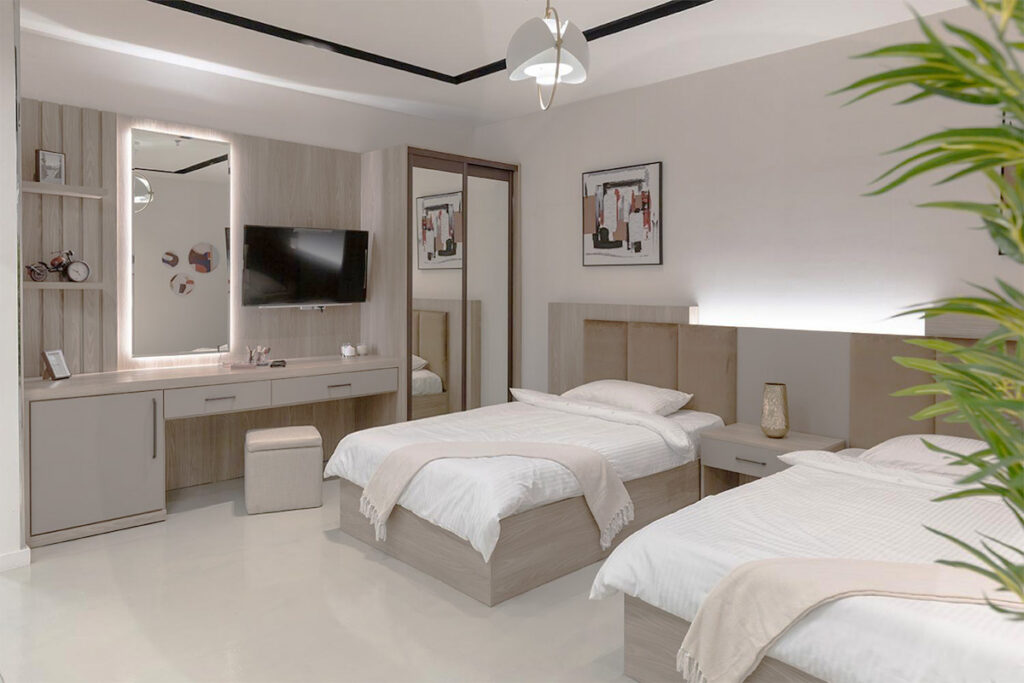
A teenager wants the room to be theirs. They want it to reflect who they are, not resemble a younger sibling’s space. At this stage the design shifts.. the same wardrobe with new facades, the same internal structure but reorganized to match a teenager’s needs for clothes, belongings, and personal space.
Bedroom design for a teenager also calls for privacy features a wardrobe with a lock, drawers with a key. These small details carry real weight at this stage.
Frequently Asked Questions
When should you start designing a child’s bedroom?
The earlier the better. Flexible design that starts from early childhood saves the cost of full redesigns at every stage. The smartest investment is one design that adapts to each phase.
Can an old children’s wardrobe be converted to suit a teenager?
In most cases, yes. The conversion happens in the facades and internal divisions while keeping the main structure. This saves the cost of replacing the entire wardrobe.
What materials work best for children’s rooms?
We recommend durable materials that handle daily use and clean easily. Matte surfaces hide scratches better than glossy ones, and larger handles are easier for young children than small or narrow ones.
Can a study area be added within the same room design?
Yes, and this is one of the most common things we design in children’s rooms. A built-in study desk with side storage units saves floor space and gives the child a clearly defined study environment within the same space.