
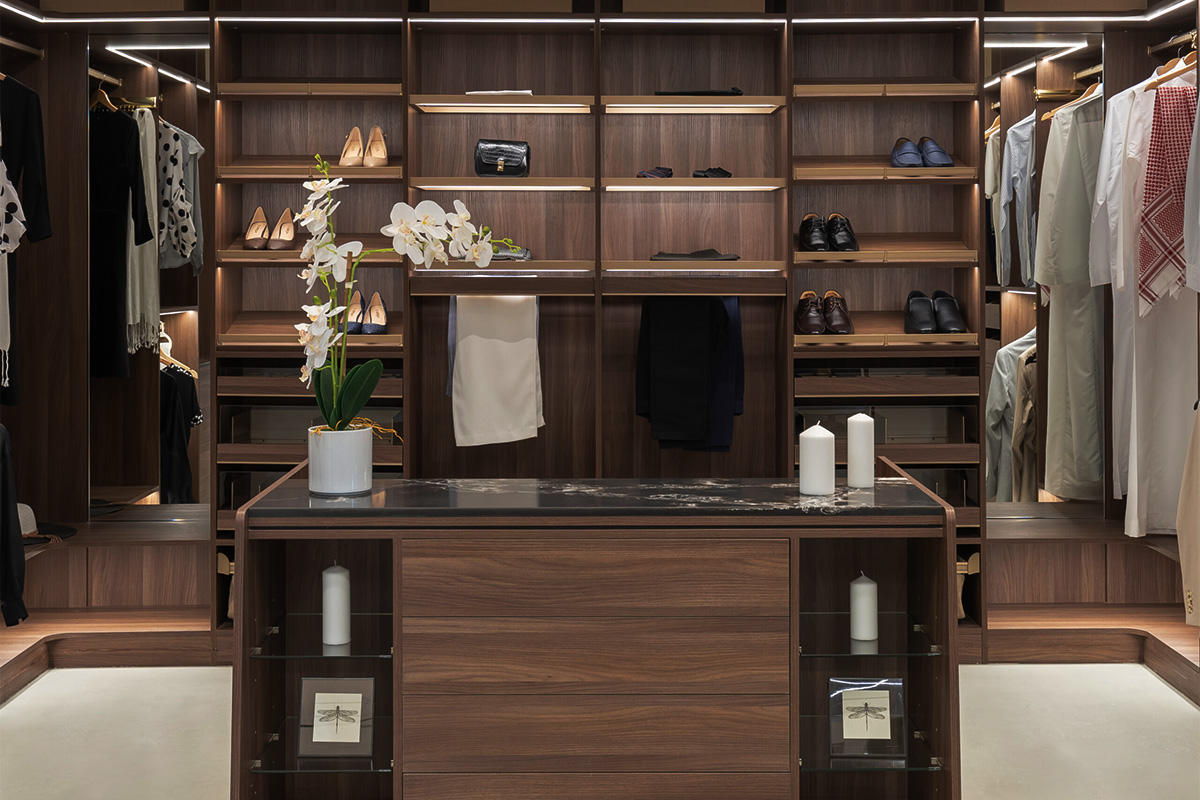
The question everyone planning a new closet asks is both the simplest and the hardest at once: open closet or closed one? There’s no single answer that fits every case. It depends on the space, the lifestyle, and what you actually want from your wardrobe.
Avoid common mistakes when designing a new closet for your room. Book your free consultation now with the best Saudi experts in Creative Closets and take advantage of the Saudi National Day offers now.
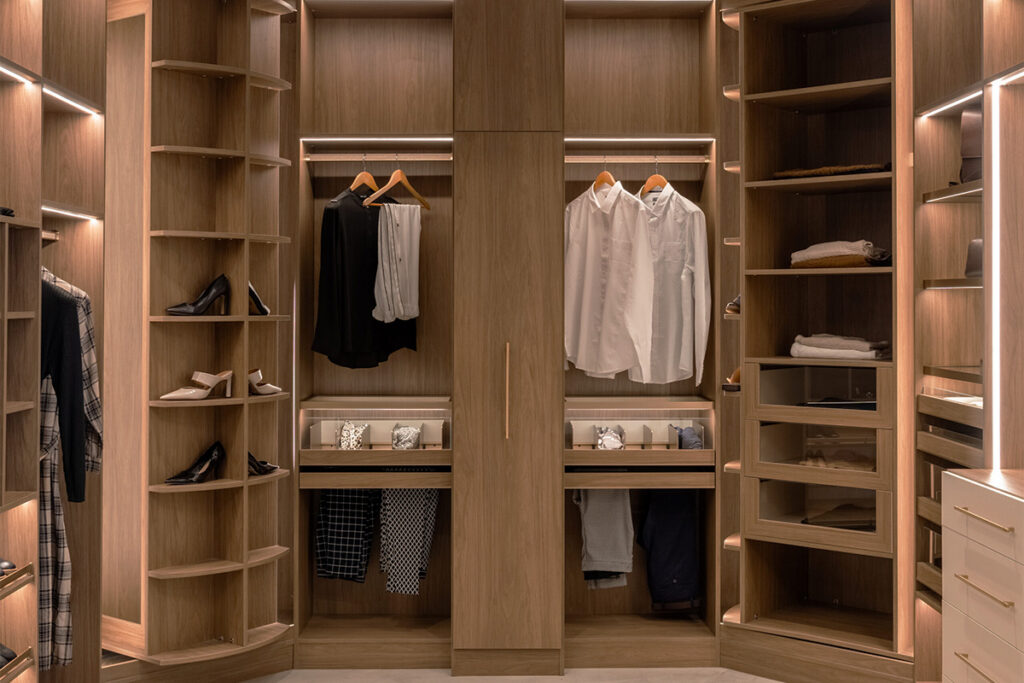
An open closet gives a room a sense of openness. No doors blocking the view, no extra clearance needed to swing a door open. This makes it a smart choice in smaller rooms or in dressing areas open to the bedroom itself. Clothing becomes part of the room’s decor, displayed as organized pieces rather than hidden away in a closed box.
But this open display comes with a price. It requires daily discipline in tidiness, because everything stays visible all the time. The small mess that disappears behind a closed door becomes immediately obvious in an open wardrobe. Dust is also a factor, particularly in areas where humidity or dust levels are high.
But a closed wardrobe is the complete opposite. Everything is behind doors and what is inside is private. This means you have more freedom in how you organise things, they don’t have to look visually pleasing, just functionally organised. A closed wardrobe also keeps clothing safe from dust and direct light, which is an important consideration for delicate or seasonal pieces.
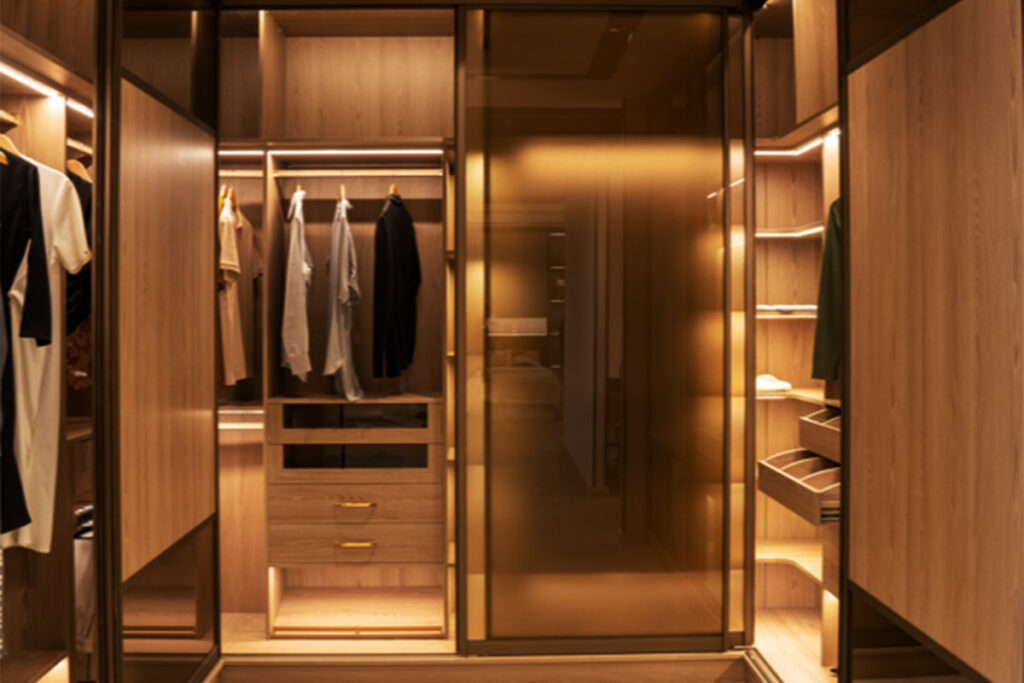
Sliding doors closets are a clever compromise between the two ideas. They close all the way around the contents without the extra clearance that hinged doors need to open. This makes them perfect for tight rooms or small corridors, where every inch of walking space is at a premium. Their smooth motion and sleek surface give a room a clean line without sacrificing closed storage.
Hinged doors, on the other hand, give you full access to the entire wardrobe contents in one moment. Open the door and see everything in front of you at once, instead of sliding a door across to reach a particular section. This suits larger rooms that have enough clearance for movement around the wardrobe.
The right decision doesn’t come from personal preference in isolation from the space. A small room with limited clearance calls for sliding doors or a partially open solution. A larger room with enough room allows hinged doors without constraints. And in many cases, the best solution is to mix an open section for display, and a closed section with sliding or hinged doors for what you’d rather keep hidden.
Book your free consultation with Creative Closets and start designing your wardrobe according to your own space from the best experts and engineers.
Frequently Asked Questions
Which type suits smaller rooms best?
Sliding doors or a partially open solution. Both save movement space in rooms with limited square footage by removing the extra clearance needed to open a door.
Do open wardrobes require more maintenance?
It requires more discipline to stay tidy because everything is always in plain sight. But it doesn’t require any additional technical maintenance, just a simple daily organizing routine.
Can both types be combined in one wardrobe?
Yes, and it’s a common, practical solution. An open section for displaying organized pieces, and a closed section with sliding or hinged doors for storing what you’d rather not show. This gives you the flexibility of both at once.
How do I determine the right space for each type?
This is based on actual room dimensions and available clearances. The best way is to measure the space accurately in a design session that will determine which door type fits the room without affecting the comfort of daily life.