

The biggest misconception in living room design is thinking one big, impressive piece is enough. The truth is the opposite. A living room that feels comfortable the moment you walk in is built from dozens of small, accumulated details, not one dominant piece.
A coffee corner makes this clear. It’s not just a table and chair placed next to each other. It’s the small spot where your daily moment of calm begins. A small shelf for coffee tools, enough surface space for a cup, and warm side lighting that gives the corner an intimacy overhead lighting simply can’t provide. These three details alone are enough to turn an empty corner into a place your feet head toward without thinking.
A modern coffee corner table needs careful balance. A height that doesn’t force you to lean too far, a surface that can take a hot cup daily without damage, and hidden storage underneath for things you don’t want to see every morning. Combine warm wood with the right ambient lighting and you get a corner that looks pulled from a design magazine, not a regular furniture showroom.
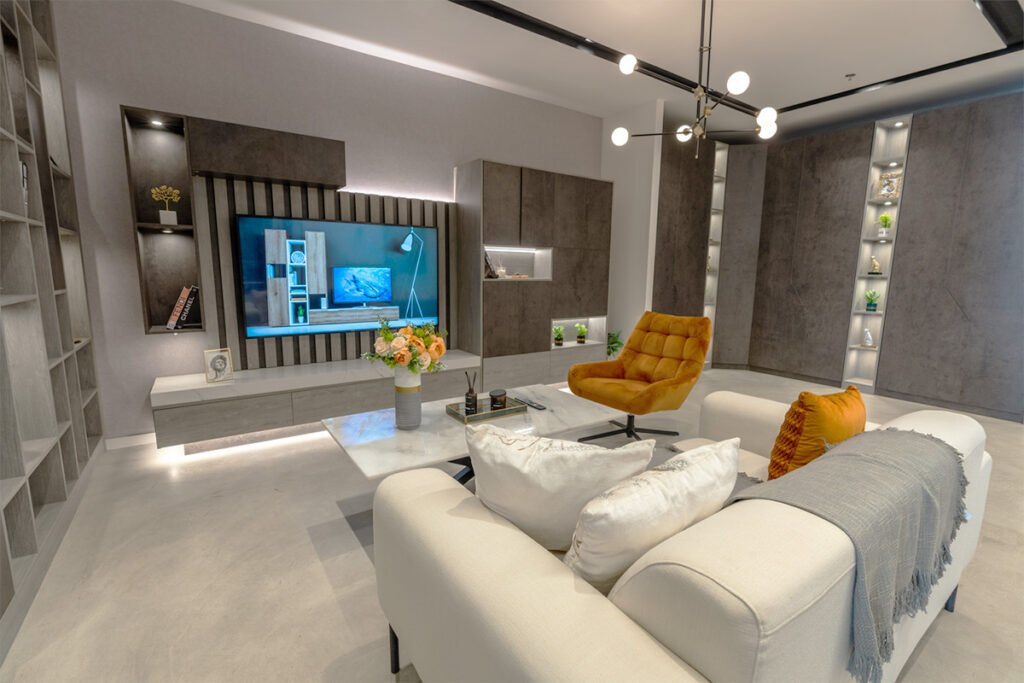
The TV unit plays a completely different role. It’s the point the eye organizes everything else around. A wall-mounted unit set at a height calculated precisely for seated eye level, with side units that hold what should stay visible and hide what shouldn’t. The result is a clean wall, cables completely out of sight, and electronics present but never weighing down the scene.
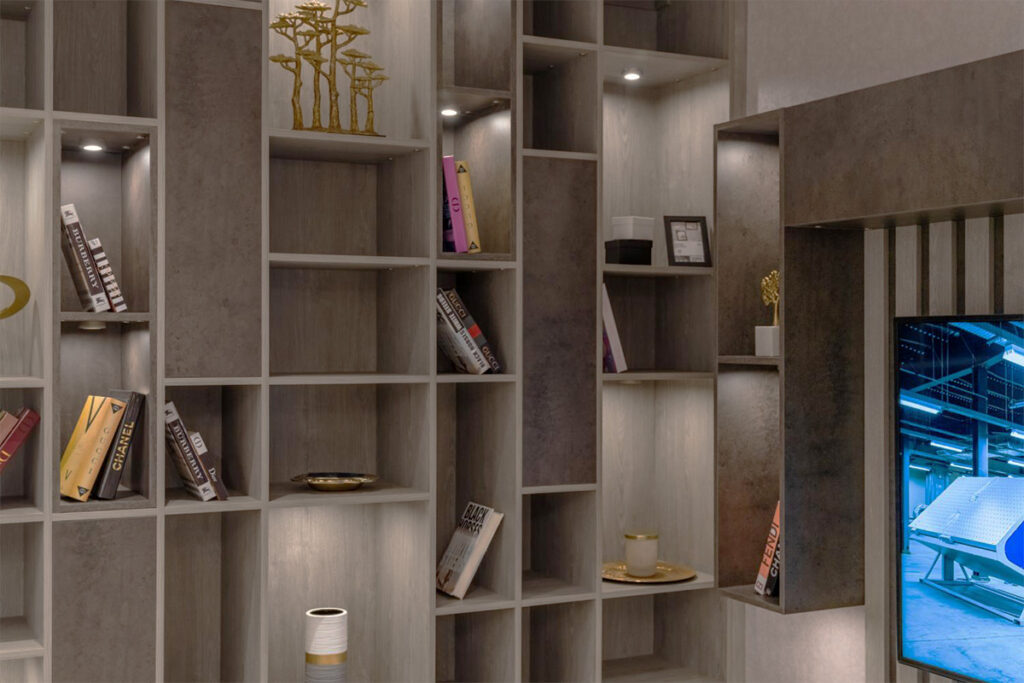
When a bookcase extends along the same wall next to the TV, everything shifts. The screen stops being the sole dominant element. Books and accessories on either side balance it visually and give the wall an extra layer of personality. This solution suits anyone who wants a living room with real character, not just a seating area facing a screen.
Side storage units solve a problem every home has things that pile up with no defined place. A unit designed as part of the wall’s visual system, not as an extra box bolted on, stores these things while adding to the space at the same time. Closed cabinets below for what you don’t want shown, open shelves above for what’s worth seeing.
When the coffee corner, TV, and bookcase come together in one coordinated wall system, the room shifts from a collection of pieces into a single considered space. But the real secret stays in the smaller details: a matte brass handle instead of shiny chrome, an intentional gap on a shelf instead of filling it completely, warm lighting instead of cold white. These small decisions, stacked together, are what separate a good room from one you don’t want to leave.
Design your living room according to your home space and your taste, and take advantage of the Saudi National Day offers on Creative Closets on all products with the finest international European materials and a 25-year guarantee. Book your free consultation now with the best experts and designers.
Frequently Asked Questions
How do I create a coffee corner in a small living room?
A small space needs good lighting more than a large size. Two comfortable chairs, a small table between them, and warm side lighting that’s genuinely enough to create a corner with a clear identity without taking up much of the room.
Does a wall-mounted TV unit suit every living room size?
It particularly suits small and medium rooms since it frees up floor space. In very large rooms it can look visually light and may need support from floor-standing side units to add the right amount of visual weight.
How do I arrange the relationship between a coffee corner, TV, and bookcase in one room?
Set the TV wall as the first anchor point. The coffee corner faces it or sits to its side, never behind it. The bookcase takes the side wall or integrates directly with the TV unit. Once these three relationships are set from the start, every other decision becomes much easier.
What’s the difference between living room and kitchen storage units?
In a living room, the logic balances display and concealment together. What’s shown should add beauty, what’s hidden should stay easy to reach. In the kitchen the logic is different entirely, efficiency and durability come first, and that’s reflected in different materials and finishes between the two.